
EcoBlue Wet Belt: Everything You Need to Know Before It Fails
If you run a Ford Transit, Transit Custom or Ranger with the 2.0 EcoBlue diesel engine, the single most important thing you can understand about it is the wet belt. It is one of the most common reasons these otherwise excellent engines end up needing a rebuild. The good news is that wet belt failure is almost entirely preventable.
What is a wet belt and why does Ford use one?
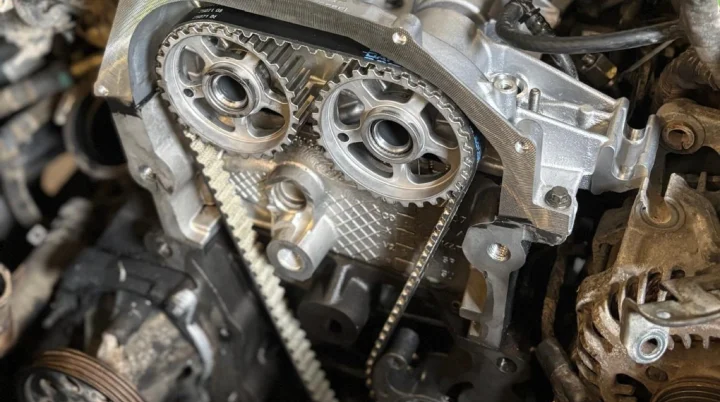
Unlike a traditional timing belt that runs dry on the outside of the engine, the EcoBlue’s wet belt runs inside the engine, submerged in oil. Ford designed it this way to reduce friction, noise and emissions. The belt drives the camshafts and, on these engines, a second belt drives the oil pump.
The problem is that over time the belt’s rubber outer layer breaks down in the hot oil and sheds tiny particles. Those particles are carried around the engine and gradually collect in the sump, where they block the oil pick up pipe, the strainer that feeds the oil pump.
The warning signs of a failing wet belt
A degrading wet belt rarely fails without warning. Watch for:
- Oil pressure warning light: the classic early sign that debris is starting to restrict the oil pick up.
- A rattle from the engine, especially on a cold start, as the belt wears and the tensioner struggles.
- Limp mode or sudden loss of power as the engine protects itself.
- Fine black flakes in the oil or visible on the dipstick.
If you see any of these, stop driving and have it inspected. Continuing to drive with low oil pressure can lead to serious engine damage and turn a manageable repair into a much bigger one.
When should the wet belt be replaced?
Ford now sets the timing belt and tensioner interval on the 2.0 EcoBlue Transit and Transit Custom at 6 years or 100,000 miles. We check that against your van’s Ford service schedule and history before quoting. Vans used on short journeys, stop start delivery work or with missed oil changes are harder on the belt, so tell us how your van is used when you book.
What happens if you ignore it?
Once the oil pickup is blocked, oil pressure collapses. The engine is then running with little or no lubrication, which can damage the turbocharger and the bearings and can lead to serious engine damage. At that point the engine may need a rebuild or replacement, so a planned belt replacement is the safer option.
What a proper wet belt replacement involves
Done correctly, the job is about far more than swapping a belt. At Copthorne Transit Centre we drop the sump, clean the oil pickup and the entire oil system, replace both the wet timing belt and the oil pump belt together, fit new tensioners, idlers and seals, and refill with the correct oil and a new filter. Every van is pressure checked, road tested and scanned before it leaves us.
Think your van needs attention?
Copthorne Transit Centre are Ford 2.0 EcoBlue specialists serving Copthorne, Crawley, Gatwick, Horley, East Grinstead, Redhill, Reigate, Horsham, Haywards Heath, Burgess Hill, Tunbridge Wells, Brighton and Worthing. Get specialist advice and a free, no obligation quote.